Guide
Do I need an Ofcom licence for walkie talkies at my event?
Short answer: it depends what you buy, and if you hire from a licensed supplier the question goes away. Longer answer below, because the short one hides a decision worth getting right.
The short version
Sometimes yes, and the cheap option has a catch.
Radios sold as PMR446 are licence-free in the UK. Buy them, use them, no paperwork. Almost anything else transmitting on business frequencies needs a licence from Ofcom, and using unlicensed kit on licensed frequencies is an offence under the Wireless Telegraphy Act 2006.
So you can run an event entirely legally on licence-free radios. The catch is not legal, it is practical, and it tends to show up on the busiest afternoon of your event.
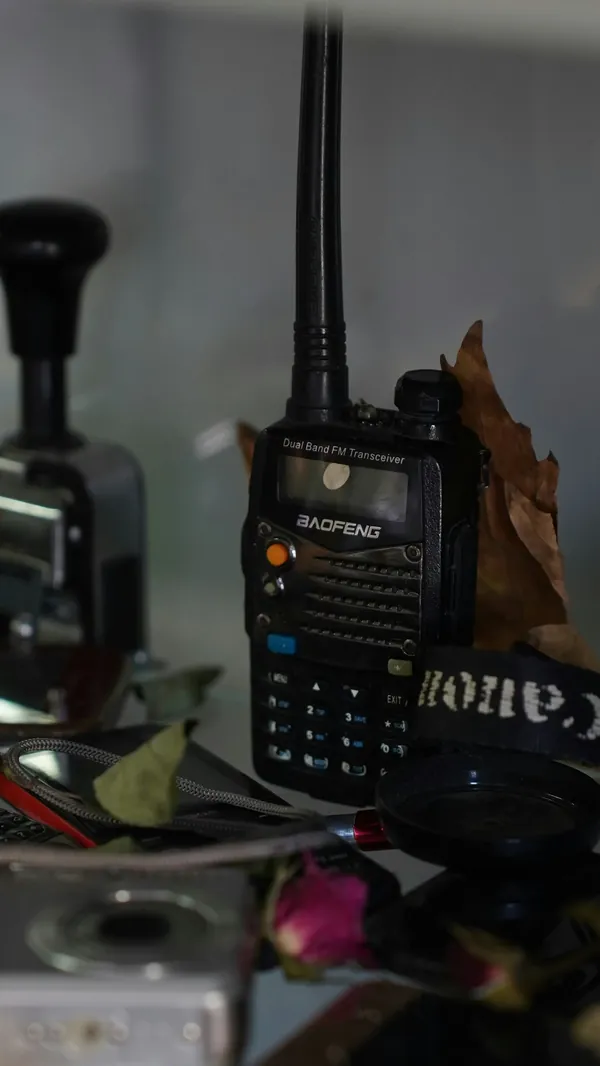
What licence-free actually gets you
PMR446 is a small slice of shared spectrum that anybody may use. That is the whole point of it, and it is also the problem.
- Eight channels, shared with everyone. Not eight channels for you. Eight channels for you and every other person within range who bought the same radios, including the funfair, the neighbouring farm and a family on a caravan site.
- Half a watt, and a fixed aerial. Power is capped by the licence exemption and you are not permitted to improve the antenna. On an open field that is often fine. Through woodland, across a large showground, or inside anything with thick walls, it is not.
- No priority and no recourse. If someone else is sitting on your channel, that is simply what has happened. You cannot ask them to move and nobody is coordinating it.
What a licence changes
A licence buys you frequencies that are assigned rather than shared, and permission to transmit with more power and a better antenna. In practice that is the difference between a steward at the far gate hearing control clearly and a steward at the far gate pressing the button twice and hoping.
- Ofcom Business Radio Light. A low-cost licence covering a set of shared business frequencies. Cheap, quick, and still shared, though with far fewer users than PMR446.
- Ofcom Business Radio Simple Site or Area. Frequencies assigned to you for a specific site or area. More control, more cost, more lead time.
- A supplier licence. What we hold. It lets a hire company operate licensed radios on behalf of customers, which is what makes the next section possible.
Why hiring usually removes the question
We hold an Ofcom (Suppliers Light) Licence. When you hire radios from us, your use of them is covered by our licence. You do not apply for anything, you do not pay Ofcom, and there is nothing for you to submit or renew.
That is not a sales trick, it is simply how supplier licensing is designed to work, and it is the reason most event organisers never deal with Ofcom directly. If you are buying radios rather than hiring them, the licence is yours to sort out and the rest of this page matters a great deal more.
So which should you actually use
- A small event, one field, a handful of people in sight of each other. Licence-free will probably do, and we will tell you so rather than upsell you.
- A spread-out site, woodland, thick walls, or anywhere with other events nearby. Licensed, every time. This is where licence-free quietly fails and people stop trusting the radios.
- Anything where comms failing is a safety problem. Licensed. If your event management plan depends on stewards being reachable, it should not depend on whether a stranger is talking on channel 6.
A few things people get wrong
- “They are just walkie talkies, there is no law about it.” There is. Transmitting on licensed frequencies without a licence is an offence, and the fact that the radio was easy to buy online is not a defence.
- “We will buy licensed radios and sort the licence later.” Licences take time, and the radios need programming to the frequencies you are granted. This is not a build-day job.
- “More channels means better coverage.” Channels separate conversations. They do nothing for range. If people cannot hear each other, more channels makes it worse, not better.
- “We only need radios for the stewards.” Usually the bar, the gate and first aid need to reach each other more urgently than anyone expects. Think in conversations, not job titles.
Where to go from here
If you want to read the rules themselves, Ofcom publishes the business radio licence types and the PMR446 exemption on its website. If you would rather not, that is roughly what hiring is for.
Our two-way radio hire page covers what comes with a hire and how many handsets an event actually needs. If you need a record of what was said, there is channel recording too.
This guide is general information about UK radio licensing, not legal advice, and the rules do change. Check the current position with Ofcom if you are buying rather than hiring.
Reading
More guides.
How Far Do Radios Reach?
What actually governs radio range on an event site, why packaging figures are meaningless, and how to plan coverage that holds up.
How Far Do Radios Reach?Does Starlink Work at Events?
What satellite internet needs to work on a field, where it struggles, how much it realistically carries, and when 4G is the better answer.
Does Starlink Work at Events?Offering Public WiFi Safely
Filtering, logging, safeguarding and data protection in plain English. What actually matters, what is just reassuring, and what to leave alone.
Offering Public WiFi SafelyStill not sure what you need?
Tell us the site and roughly who needs to talk to whom. We will tell you whether licence-free would genuinely do, and say so if it would.
Ask us Two-way radio hire